Showing posts with label Samurai. Show all posts

Saturday, 1 August 2026

Samurai Gallery - Royal Armouries, Leeds.

 
With the visit to the Royal Armouries, the main thing I wanted to visit was the special exhibition for this year featuring the Mongolian Empire and Genghis Khan.

But, and I know any American people reading this will scoff, I wanted to make the visit a full day, being just under an hours drive up the motorway from home.
Also just having a day out with the Mrs was a bonus, so we were making the most of it.

The Royal Armouries at Leeds has five floors of arms and armour displayed, re-enactment zones, sword fighting and other displays in a full arena on the second floor, and around Easter Weekend every year they host a Jousting Tournament (I am hoping to get time off work next year for that).

Coming out of the Mongolian Exhibition, on the fourth floor is the African and Asian galleries...most interesting.

These are the photo's I took going round the Samurai gallery, before the Mrs had to pull me away so we could see other things...


I've not got much to write about the various armour sets, as if you zoom in on the photo's you can read the various descriptions from the plaques in the displays.

I did however treat myself to some research material, as one of the projects I want to begin working on again soon is the Samurai project.

The last time I visited Element Games with the group, I was hoping to get a game of Dragon Rampant and took along two forces to enable this.
Unfortunately, no-one wanted to play, so I didn't get the game in.

Instead I grabbed some terrain from the shelves there and made an impromptu photo setup and grabbed the following:


So the aim is to work on finishing a unit of the World Eaters alongside a unit for the Samurai, clearing the table and adding to the forces.

I think I'll work on the foot Samurai I have first for this project and then see what we need from there.
I'm waiting for the MyMiniFactory money off sales before I purchase any more STLs from Kyoushuneko for this project, as they've released a lot more since I last bought some...they now have a Mounted Sohei unit!!!!!!!

I have one more post for the Royal Armouries to do yet, featuring the photos of the European and islamic arms and armour I saw, including the Armoured Elephant, always a big draw.


Until next time, have nice day...

Tuesday, 18 November 2025

The Feudal Japanese Project - part 6. Sohei Command.


The morning mist still clung to the slopes of Mount Izuna when Captain Renkō of the Uesugi Sohei drew his blade and turned to face his assembled warriors. Clad in red and yellow lacquered armour, their faces half-hidden behind cloth and prayer beads, the monks stood in silent ranks, the faint chiming of metal rings from their naginata hafts whispering like wind through a temple garden. Below them, in the valley, the banners of the Hojo clan rippled in black and white — invaders, desecrators, men who had come to burn the monasteries of Echigo and seize the holy mountain passes. Renkō raised his hand to the sky. “For Bishamonten, the God of War!” he cried. The mountain answered with the roar of a hundred voices.

The monks surged forward, descending the slope like an avalanche of faith and fury, the hiss of arrows slicing through the air. Hojo archers loosed volleys in panic, their shafts striking armour and passing through saffron robes — but still the Sohei came, their formation unbroken. Renkō led from the front, his crimson and grey banner trailing behind him like a comet’s tail. His katana swept wide, the curved blade flashing through armour and flesh as he smashed into the Hojo vanguard.

The impact was like the meeting of storm and sea. Steel met steel, and the calm chants of the monks turned to war cries. The Hojo line wavered, unused to such disciplined fury. Renkō fought as though possessed, his weapon cutting through men and spearshafts alike, the iron rings on its haft chiming like temple bells. Around him, his brothers formed a tight wedge, pressing deeper into the enemy formation. Even as they fell, their mouths still moved in prayer.

But the Hojo were no mere rabble. Their captains rallied them, forming spear walls and driving horses down from the flanks. A mounted samurai thundered toward Renkō, his blade gleaming. The Sohei captain sidestepped, catching the horse’s bridle and dragging the rider from his saddle in a burst of strength. With one motion, Renkō brought his blade down, ending the man’s cry before it could form. The clash grew thick with smoke and sweat, and the monks began to chant once more — not for victory now, but for transcendence.

*****
It has been a while since I posted anything Samurai related on here, but I carved out some painting time recently and buckled down to finish these four miniatures of the Sohei Command Cadre which I started over eighteen months ago...

Well, not to repeat things from previous posts recently, but life has kind of gotten in the way recently and I've had to work projects in amongst everything else.

As this group of models were 75% finished, I decided to buckle down and finish them off for another "easy win" to keep momentum and enthusiasm high.

Originally, I was going to use the Samurai for a big Hail Caesar project, and I might still do that, but I've also been working on a campaign for Lion Rampant using these models and my own custom ruleset for larger skirmish games of about 50-70 models per side, so I decided to keep them on individual round bases to be useful for different gaming systems.

The complete command staff, all from Kyoushuneko Miniatures and 3D printed by me at home.

We'll start with the two "Gunsou" (Sergeants). Both of which I chopped up a little to change their Spears to Katana to match the Daimyo (more later). I tried to mix things a little, but ensure that they still had the Saffron Yellow robes, for which the Sohei were famous. But then I mixed the other colours around on different areas of the models to give individuality to them, and also to ensure that the historical reason for the Sashimono (the back banners) was actually real, and not just because "they're pretty" like I've heard some people say before, when referencing the period.

Taichou Renkō, the leader/warlord. This was actually the model which started the whole process of this project. I've been interested in Japanese history since my late teens, and read about the great battles of Kawanakajima many times. Uesugi Kenshin is a great historical personality, and one of my favourites as I was studying the period when I was younger.
So I decided that when this model, the Sohei Daimyo, was on special offer and reduced in price I was going to get it just to paint. One thing led to another and we ended up here, with about project on the go...

Anyway, I decided to keep the colour palette very constrained on this leader mode, representing his better equipment which he could pay more for and not have to mix and match like everyone else.
So Yellow and Reds are Warlike colours and fitted with the look I was wanting to achieve, I also took pains to try to get some of the silk patterning from real period armour onto the model, so the stripes of red and yellow, which contrast really nicely with the white headwrap and black Jinbaori (overcoat).
I love the confident stalking forward pose with the sword held low.

The banner bearer of the group comes from the Sohei command pack, and carriers an Uma Jurushi type banner, they had a lot of different types of banner in this period. The Sengoku Jidai, as well as being known as "The Age of the Country at War" is also sometimes referred to as "The Age of Flags". Kind of fitting with all the back banners and then banner types declaring a Daiymo's prowess and different clans, etc.

The Sohei himself was painted as the previous models, but the banner is where I could really try something. Some of the banner of the period are really, REALLY elaborate and intricate with lines of writing declaring a haiku or verses from Buddhist religious texts or the Art of War (the Samurai were obsessed with Sun Tzu's writing).
I decided I wanted to try free-handing the banner and hopped onto google translate.
The text I translated into Japanese Kanji reads "Heaven on Earth" which is the last line of a historical death poem*. 

Autumn wind fades…
My shadow drifts from the world,
silent as snowfall.
One breath, one last remembrance—
Heaven on Earth

A lot of fine brush control was needed for the Kanji, something I'll have to try to replicate as I move through the different units eventually. The red swirl was taken from a documented Sashimono of the Asai clan, a derivative of their main colours, but suitable for my purposes.

As for the Sashimono on these models, I wanted something simple which wouldn't detract from the main models, but also wasn't just a flat one colour flag. So I altenated stripes between the deep red and dark greys I had on my table when I got to that stage. I think they turned out well and I am purposely not adding a "Mon" (symbol) to them, so that they can be used between the main clans as a backup force, as the Sohei fought for whoever would most serve their own political goals at the time.
Oda Nobunaga broke their power and burned nearly every temple he came across during his march on Kyoto because he was tired of their interreference in his efforts to unit Japan under his banner!

I decided then to brush off the Sohei I had finished previously and take a full battalion/warband photo.

They're looking good so far, and I want to pick up the Kyoushuneko Sohei archers and cavalry at some point to add to the force. One of the cavalry models I will only print one copy of and I will modify him to be a mounted Daimyo, maybe even Uesugi Kenshin himself, unless I can find a good STL which represents him and keeps the look of the Kyoushuneko models themselves.

Next for the Samurai project, I have a unit of Cavalry I have been working on to finish and I've started on a unit of Samurai on foot as well. I may finish to cavalry and then force myself to paint an Ashigaru unit, as these were the main troops of the period. The Samurai are akin to Medieval knights of Western Europe, the Ashigaru would be the Men-At-Arms/Levy troops raised to fill out the armies.


A note about Mount Hiei:

Mount Hiei is located North East of Kyoto and has been the feature of many folk tales over the ages. It was thought to be home of the Demons of Shinto lore, although it is predominantly known for the Buddhist monks, Sohei, who originate from the temples of Enryaku-Ji.


First created in 788, the temple rapidly gained prestige and power by protecting the ancient Japanese Capital of Kyoto as it was thought in ancient geomancy that certain negative spirits originated from the North East direction. Thus the temple was thought to be a protective bulwark for the capital which led to its rise within the political power structures of the Imperial Court during the Heian period, 8th-12th centuries.


Enryaku-Ji is notable for being documented as the birthplace of the Buddhist Tendai sect, unique to Japan and nearly all later schools of Buddhism within Japan originated from the Tendai sect, founded by ex-monks of the temple. These include sects such as Honen, Nichiren and Shinran teachings.
The temple at Enryaku-Ji was said to have an image of the Bhaisajyaguru (Medicine Buddha) enshrined within it, to which the monks would meditate before.
The founder of the complex, Saicho, also lit a lamp of oil before the Buddha and prayed that the lamp would never be extinguished. Now known as the Fumetsu no Hoto (Inextingsuishable Dharma Lamp), it has remained in the temple and remained lit for more then 1200 years.


Until next time, have nice day...

*Death Poem's or "Jisei" (or more popularly known in the west as Haiku's) are short, spare poems written either by one before their death, or by someone else afterwards honouring someone who deserved it. They follow a particular rhythm and number of syllables in each line creating a unique cadance when read aloud.

Saturday, 23 March 2024

The Feudal Japanese Project - part 5. Samurai Cavalry.


A growing thunder sounded from the woodlands and the lined up Ashigaru looked nervously around. The dark woods to the flank bordered the road they were marching down but we're said to be haunted by Kami or worse Oni, the lazily spiralling mist concealed much visibility which only made their nerves worse.
Some grumbles started amongst the men, and their leaders were forces to turn back to threaten them to stay the line.

With a great cry, the Samurai cavalry burst from the treeline, the colourful tack of the horses flowing with their ground eating gallop.
Atop the horses sat fully armoured warriors, lacquered plates of armour beating against each other with the can't of their mounts, the brightly coloured silk cords straining with the pressure.

With a crash, the thunderous charge hit the Ashigaru and men fell in droves. Bowled over by the horses and cut down by the wickedly sharp Katana which were expertly wielded to cause maximum damage.

Blood arched through the air and screams rang out. The drum beat of the cavalry added to the din as they pushed further into the flank of the enemy. The archers stood no chance and soon men were fleeing for their lives, even as other Ashigaru attempted to form up and provide resistance to this attack.

The leader of the archers stood his ground with his Katana drawn as the cavalry commander spotted him through the press of men and turned his mount to charge. With a brief nod of acknowledgement, they engaged in combat, swords arcing through the air and sparking off one another, the horse turned attempting to kick out.

As the Samurai avoided the horse he dropped his guard and with a flash, a katana ripped though his neck and severed his head with a welter of blood. The cavalry commander signalled his drummer who changed his beating and sounded the retreat, horsemen wheeled and galloped off back into the mists, leaving blood, the dead and dying in their wake, as a fresh unit of Ashigaru with spears moved up the road.

*****

Work continues on the Feudal Japanese Project, and I am very happy to say that I now have an entire* cavalry unit finished for the first section of the project.

The full unit, in all it's glory:

Firstly, this has to be the most colourful I've ever painted. Historically, Samurai didn't have a uniform armour colour, they just brought whatever they owned, heirloom, fashionable, etc. The Sashimono, or back banners, were the identifying marks to tell friend from foe on the battlefield. Both these statements certainly make the army eye catching.

Secondly, just like with the Sohei, there are very few paints on these which are not Contrast paints. I love the way the paints settle around the different panels and ridges of the armour.
Contrast paints also allow me to not have to paint all the silk cording which kept the armour plates in position, I'm just working patterns onto the armour facings instead.

As these are to be somewhat speed painted, it's a cheat I feel is worth it.

The original four horsemen which I finished about a week ago:

These were an experiment/attempt to see how the first figures would look when fully completed, and whether I liked the more historical look with the various colours, or if i wanted to default back to the "video game" look with units in a uniform colour schemes.

I do love the varied look to the unit, and decided to stick with the armour plates being majority Grey or Black contrast, as they, along with browns were the majority colour.
I did try something a little different with the chap on the right having yellow lacquered armour. I'm a little dubious about it, but he fits in with the unit, one amongst many won't make much difference:

The command element, featuring the "Chūi" (Lieutenant) in the center, he has a sort of cloth wrap over a shoulder and covering his armour, so I decided to do that up in yellow***, over his grey and blue armour, and then gave him some red shinto prayer beads.
There is a closer look at the drummer in the inset bottom photo:

Kyoushuneko do a special command section, which includes a different head crest to the rest, in this case I decided to make them gold to stand out as the unit leaders.
I couldn't get the unit standard bearer to print properly, so I eventually gave up**.

The ragged battle line looks I was going for raises it's head again :

I am really loving the look of these units all ranged out in battle lines, the visual impact of the armies will be amazing (hopefully).

Another look at the unit, you can see how things line up on the big bases in this photo:

Rather then pack them on, I spread the command section out a little more on their base, I have enough cavalrymen to do a second unit of twelve men, so three bases of four models.

As mentioned before, the Sashimono were the main way of identifying units on the medieval battlefield in Japan. This side on photo of the unit leader gives an indication of how this unit is identified. Every unit in this particular clans army will have the three red symbols on their Sashimono, but the underlying pattern (a horizontal black band in this case) can be varied, my foot Samurai are getting a blue section on their banners:

This adds another ten *models to the painting total for the year.
For the AHPC, these are 28mm mounted models and provide ten points per model, so a cool.One Hundred points added with just this unit.

And we'll add a photo of the painting queue on the tray, a Foot Samurai unit, Ashigaru Archer unit, Sohei Command and Oni bases, and then some varied character miniatures at the moment:

Now a note on Japanese horse breeds:

Whilst researching horse colourings for Japan, I came across a note that a lot of the native breeds are either extinct or in severe danger of becoming extinct. This is due to the Japanese military's policy around 1890-1945 of gelding all stallions and breeding with larger foreign stock to give them larger horses for their cavalry or logistics corps.

Most native Japanese horses would be classed in modern terms as ponies, as they don't measure up to the minimum height to be classed as a horse. Misaki horses stand only 132cm tall to the withers, the tallest point between the animals shoulders.

The above photo are some Misaki Horses grazing away, this breed are classed as critically maintained as there are roughly 100 of them living protected in the wild at the southern tip of the main Japanese island of Honshu.

A more populous breed is the Dosanko, or Hokkaido pony:

There are roughly 2000 of these small horses which live along the northern Pacific cost of the far northern island of Hokkaido. They are still classed as endangered and conservation efforts are in place by several Japanese universities to manage their population.


I hope you've enjoyed this post and the start of the Wargaming army, I'm really looking forward to seeing the larger blocks of units on the table.
The aim is to start gaming with the forces after the kids school holidays over the summer, when we can properly get back to gaming after the break, that also gives me PLENTY of time (famous last words) to get stuff completed, hopefully.


Until next time, have nice day...


*I say entire, but right before I was about to varnish the miniatures, one of them fell from the tray and shattered into various pieces (legs, tail, ears, rider, riders arms, Sashimono) and was hastily replaced with the rider who has a Horo Cloak instead of Sashimono.
I do have a spare horseman, so he'll be getting painted up quickly, but I was on the "finished unit" enthusiasm so posted these.

**Fortunately his body will become the base of the next cavalryman to the worked up to join the Squadron.
In place of the banner, I'm going to add a spare katana and have the Gunso (sergeant) dual wielding like a badass!

***There are multiple period artwork pieces of Samurai wearing tiger skin fur cloaks and such, obviously acquired through trade with China.
I am not about to go back in and add tiger stripes to the cloth, so the yellow will suffice.

Sunday, 10 March 2024

The Feudal Japanese Project - Part 4. Background.


I mentioned in the previous post in this series that I was going to explain my thoughts behind this project, I've therefore broken this piece down into three sections;
  • How did the Project begin?
  • Inspirations of the Project?
  • The aims of this Project?
How did the Project begin?

This is a project which I have had in mind for a very long time, twenty five years or more this has been sitting in the back of my head, awaiting it's time in the sun.

Things came to a head last year, when during one of our game days at Element Games we were talking about various things we would like to do, or have on the go.
I was adding to the Tyranid horde, Fraser was looking forward to Legions Imperialis being released and Cardboard Fortress was talking about Bolt Action, doing a small late war British and German force each so that we could field them in a game (one of us often build both sides for a game we want to play, so that we're not relying on the others maintaining enthusiasm).
Talk inevitably turned to dream projects and Hail Caesar was brought up.
Having watched a number of battle reports By 7th Son Wargaming on YouTube, I was interested in the system, and happened to mention about wanting to build a Samurai army.

"That would look brilliant".
"A huge game would be amazing, imagine all the flags though".
"Well I have been 3D printing some Sohei warriors for Test of Honour".
"You have to do the army project now".

So I kind of got pushed into the project, but it's something I was keen on anyway, so it was just that first push which was needed to get going.

Inspirations of the Project?

I've always been interested in the Samurai, all the way back to when i first got a copy of Age of Empires 2 on PC, and i would spend more time sat reading the encyclopedia of the gane, rather then playing it.

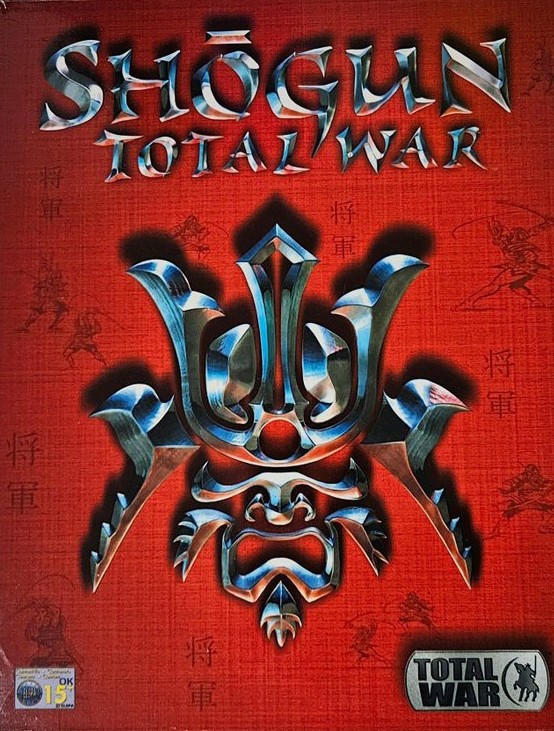
Next in the PC gaming history came Shogun: Total War. The first entry into the massive series, and still a personal favourite*. 

It also introduced me to historical figures such as Oda Nobunaga, Takeda Shingen and Uesugi Kenshin**.
(If I can ever make a miniature of one Daimyo, it would be Uesugi Kenshin like this artwork).

During this time I was in my previous career as a bus driver and slaving away for just above minimum wage (as it was then). I was in no form able to afford an army of miniatures from the Perry stable. Absolutely beautiful miniatures when compared to the other offerings at the time.
So I continued on with the Games Workshop path which ensured I was able to play games with my toy soldiers I was spending my spare cash on***.
I was also introduced to Magic: The Gathering, and through the local card/comic book store a game called Legend of the Five Rings.

The world of Rokugan from. legend of the Five Rings immediately grabbed me, and suffice to say, twenty-four years later, is still with me.

The setting is a "White guys idea of what's cool about medieval Japan"**** being that it has Samurai, the Kaiu Wall (the Great Wall of China), the bad guy is called Fu Leng (syllables which do not appear in the Japanese language) and the map of Rokugan is almost the far east of mainland China anyway.

I could carry on about Rokugan and L5R for pages and pages, but that is beyond the remit of this post (it may be something i look at in a future post).

The aims of this Project?

This project is mainly an army building project, and I mean ARMY!

With force creation in Hail Caesar, you create a Division/Battalia/Squadron (whatever you want to call it) consisting of a command base and then a number of other troop bases to the size you wish.

You then issue orders to the division, IN THE ORDER YOU WANT THEM ACTED UPON (this is important) and then roll against the division commanders strategy rating and whatever you beat it by is how many of said orders you get to actually play out.

It's a great system and a real sense of battlefield friction is built into the command aspect of the game.

As I said, Army building, so I'm going to work my way up to four or five divisions per army so that we can eventually have a truly massive battle.

I'm also keeping the miniatures "rules agnostic" and magnetising them to the big bases, so that they can be used for Dragon Rampant and Age of Sigmar (proxying in for some Cities of Sigmar). This aspect of the project is thanks to the suggestion of a third friend I told about the project who has been helping me with printing the numbers of figures which I need.

Speaking of figures.
The vast majority will be printed from Kyoushuneko Miniatures STL files as not only do I really like the digital sculpts, but they are a joy to paint.

As mentioned in part 1 of this project, I'm not sticking to definitive unit sizes, but everything will have up to three of the big oval bases to make a Large unit (small is one base, standard is two bases). I'm working this way because I have a copy of 7th Son's nodal campaign rules for the Wars of the Roses which I can reskin to Feudal Japan, and they include an easy army builder to help with force organisation and attrition.

I've just built a Sohei Command Base, and am looking through my box of prints to see about making a couple of Samurai Commanders with attendants for the clan command bases.

Alongside this I have assembled a fair few bits to work on as the days slowly begin to get longer as spring approaches here in the UK.
Hopefully with some better weather, I can do some painting outside and I can get primer coats to dry properly again*****.

This is one cavalry unit, to give a sense of the size of units I am aiming for, and there are multiple units planned for each division.

I'm going to end this post here, so Until next time, have nice day...


*Not only because of the setting, but also how simple it is compared to later versions of the series.

**A personal favourite historical figure, look up his story of ruthlessness and his rivalry with Takeda Shingen and see what I mean!

***I know GW models are expensive, but the difference is that I could actually get games in with those. I didn't know anyone at the time who had a hankering for historical wargaming, and I hadn't discovered solo rules at this point.

****According to Matt Colville in his video describing it. That's a bit inflammatory given modern sensitivity, but who cares?

*****I've learnt the lesson over too cold a can of rattlecans primer, and also the lessons about Rustoleum white primer which lied on the tin and dried with a semi-gloss finish meaning Contrast paints would not adhere to it at all...